


Poppy - Live Video Chat
4.754.00 Reviews
App Specs
- Version
- 1.1.5
- Updated On
- License
- Free
- Downloads
- 500,000+
- Developer
- Wolf Club Studio
- Categories
- Social
- Platform
- Android
Screenshots





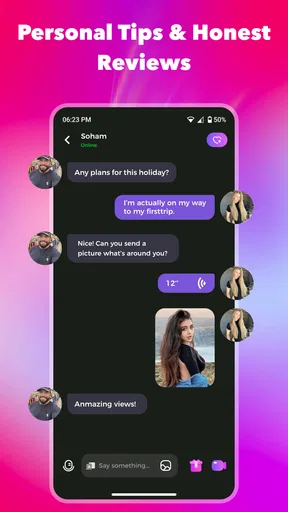
 Analysis by AppCompare
I approached Poppy - Live Video Chat as someone looking for a quick way to meet unfamiliar people through live video rather than another carefully edited social feed. That distinction matters. The app, developed by Wolf Club Studio, is built around spontaneous conversations with strangers, so its appeal comes from surprise and immediacy, not from collecting followers or polishing a public profile.
My first impression is that Poppy is best understood as a casual social experiment. You open it when you feel like talking, discovering different personalities, or simply breaking a repetitive evening routine. The experience can be lively, but it also asks you to be comfortable with uncertainty. Some conversations will be pleasant and natural; others may be awkward, short, or not worth continuing. That unevenness is part of the format rather than a fault unique to this app.
The app is free to install and is aimed at mature users aged seventeen and above. That age guidance should be taken seriously because live video with strangers creates a very different level of exposure from text-based communities. I would not recommend treating it as a harmless children’s chat room or handing it to a younger teenager without close supervision. For adults who understand the risks and want a low-commitment way to interact, it offers a direct entry point.
What the first session feels like
Poppy does not require the same patience as a traditional social network. With a conventional platform, I usually spend time creating a profile, following accounts, waiting for replies, and learning an algorithm. Here, the central idea is much faster: enter the social space and see who is available. That makes it suitable for a spare moment, but it also means the quality of the experience depends heavily on the people you encounter.
The app’s store summary describes random video chat with strangers, and that is the right expectation to carry into the first launch. It is not a replacement for a messaging app where I already know everyone, nor is it a structured dating service with a carefully managed matching process. If your goal is to maintain existing friendships, a familiar messenger will be more reliable. If your goal is to discover unexpected conversations without making a long-term commitment, Poppy makes more sense.
I found the strongest use case to be a short, open-ended session. Instead of planning to spend an entire night inside the app, I would start with the idea of having one decent conversation. That small target makes the random format less frustrating. It also helps you leave when the atmosphere is not right rather than feeling obligated to keep swiping or answering.
Because this is live video, your surroundings become part of the interaction. Before starting, I would check what appears behind me, remove anything private from view, and use a location where other people will not accidentally appear on camera. A plain background is not necessary, but a controlled one reduces the chance of revealing more about your home or routine than intended.
Worth Reading Before You Choose

EA SPORTS FC Mobile 26 Is a Bigger Football Game, but It Takes Time

Flipboard Shows What News Apps Must Do Beyond the Feed

Switching to Android Auto Means Rethinking Your Driving Routine

Google Calendar Makes a Crowded Week Easier to Manage

Ludo King Makes the Most of the Minutes Between Plans

Baby Panda World Brings Quick Play to Modern Phones, but Its Game Library Feels Busy
Another practical point is that video chat can consume attention in a way text chat does not. I would avoid opening Poppy while commuting, crossing a street, working with confidential material, or sitting somewhere that makes it difficult to end a conversation. The app is more enjoyable when I can give the other person a few minutes of focused attention and leave without pressure.
Getting ready without overthinking the profile
The first setup should be approached with restraint. I would use a display identity that does not reveal my full name, workplace, school, address, or other details that could make me easy to identify. A stranger does not need a complete biography to decide whether a conversation is interesting. Keeping the initial information general gives me room to learn how the app feels before sharing anything personal.
I would also decide in advance what I am willing to discuss. That sounds obvious, but random video conversations can move quickly from small talk to questions about location, relationships, money, or contact details. Having a simple boundary ready makes it easier to respond calmly. “I keep that private” is enough; there is no need to justify it.
The app is available for devices running Android 8.0 or later, which makes it accessible to many older phones as well as newer models. On an older device, I would close unnecessary apps before starting a video session and make sure the phone is not already struggling with storage or battery. Even when an app is compatible, live video is more demanding than reading a social feed.
Poppy’s current version is 1.1.5. I would install it from the official app marketplace, check that the application shown is from Wolf Club Studio, and then update it when the platform offers a newer release. That simple habit matters more for a live communication app than for a static utility, because updates can affect stability and the way users interact with one another.
The financial model is easy to misunderstand if you only see the word “free.” The app costs nothing to download, but it includes optional in-app purchases ranging from $0.99 to $99.99 per item. I would not spend anything during the first session. First-time users should learn what the free experience actually provides, then decide whether any optional purchase solves a real problem for them. A large purchase made out of curiosity is rarely a good test of a social app.
How I would aim for the first meaningful conversation
The first successful action is not simply connecting to another camera. For me, success means finding a conversation that feels comfortable enough to continue for a few minutes. I would begin with a neutral question that does not demand personal information: what brought the person into the app, what kind of music they enjoy, or what they usually do to relax. These questions create an opening without turning the chat into an interrogation.
I would keep my own introduction short. Mentioning a general interest gives the other person something to respond to, while avoiding details that could identify me. The best early exchange is usually balanced: I answer a little, ask a little, and notice whether the other person respects the same rhythm. If they only demand information or repeatedly ignore a clear boundary, I would end the interaction rather than trying to repair it.
A useful technique is to treat the first minute as a quick comfort check. Is the audio understandable? Is the person speaking respectfully? Are they showing anything that makes me uneasy? Do they accept a normal subject change? These signals tell me more than a profile label can. If the interaction feels wrong, moving on is not rude; it is the intended advantage of a random conversation service.
I would also avoid judging the whole app from one awkward match. Random social products naturally produce uneven results. A better test is to try a few brief conversations at different times, while still stopping if the environment becomes unpleasant. The goal is not to force a connection but to see whether the format regularly gives you moments you genuinely enjoy.
For a realistic everyday example, imagine finishing a long day and having fifteen quiet minutes before dinner. I might open Poppy from a private room, speak with one person about a hobby, and leave after the exchange becomes repetitive. That is a sensible session. I would not use the same moment to discuss a work problem on camera, reveal where I live, or agree to meet someone immediately. The app can fill a small social gap, but it should not replace ordinary judgment.
Where first-time users can get confused
The biggest source of confusion is assuming that “random” means every interaction will be equally interesting or equally safe. It does not. The format removes much of the filtering that makes established social networks feel predictable. You may encounter different communication styles, ages within the allowed audience, languages, and expectations. Some people want a genuine conversation; others may be looking for attention, entertainment, or a reaction.
That is why I would not measure Poppy by the number of connections I make. A fast sequence of brief chats can feel active without being meaningful. I get more value by slowing down when a conversation is respectful and leaving quickly when it is not. This is a small but important trade-off: the app’s speed gives me choice, yet that same speed can encourage shallow interactions if I treat every person as disposable.
Another common mistake is assuming that a video call automatically proves someone is trustworthy. It proves only that a camera is showing a person or image at that moment. I would not send money, share private documents, reveal a live location, or move to another platform because someone seems friendly. If a person creates urgency or asks for secrecy, that is a reason to stop, not a reason to become more curious.
Camera comfort can also be misleading. Some users may prefer not to show much of their room or may need a moment to adjust their phone. I would distinguish ordinary awkwardness from behavior that crosses a boundary. A quiet opening does not necessarily mean the conversation is bad, but repeated pressure, sexual comments, or unwanted exposure should end it immediately.
The mature seventeen-plus rating is another point that deserves attention. It signals that the app is not designed as a general family social space. Parents considering it for a young person should not rely on the free price or simple interface as evidence that it is suitable. The live presence of strangers changes the risk profile, and a younger user may not be ready to manage it independently.
Practical habits that improve the experience
My first useful habit would be setting a personal time limit before opening the app. Random video chat can become a loop of “one more conversation,” especially when the previous exchange ended abruptly. A short session keeps the app in its best role: an occasional social break rather than a default response to boredom. If I find myself irritated by every new connection, that is a good signal to close it.
My second habit would be using a neutral opening and watching how the other person responds to boundaries. This is more valuable than trying to create an impressive introduction. Someone who can accept a simple “I would rather not discuss that” is showing a quality that matters in a stranger-chat app. Someone who argues with the boundary has already provided enough information for me to leave.
Third, I would avoid making the room itself part of the conversation. A carefully positioned camera, a plain wall, and headphones can reduce accidental disclosure and make it easier to hear the other person. Headphones are especially useful in shared spaces, although I would still avoid using the app where people nearby might be recorded or appear without knowing it.
A less obvious trade-off concerns spontaneity versus control. Poppy is attractive precisely because I do not have to build a large network before talking. However, users who need detailed filters, professional networking, persistent message history, or strong control over who can contact them may find the random model frustrating. In those cases, a moderated community built around a specific interest or a conventional messaging service would be a better fit.
I would also keep optional purchases separate from emotional decisions. If a conversation is exciting, it can be tempting to pay immediately for anything that seems likely to extend the moment. Waiting until after several sessions gives me a clearer idea of whether the app is useful in my routine. The free entry point is enough to judge whether I enjoy the basic concept before spending money.
How it compares with familiar social alternatives
Compared with a standard social network, Poppy feels more immediate and less permanent. I do not need to spend as much time browsing posts or constructing a public identity before reaching another person. The cost is predictability. Established networks let me choose communities, follow interests, and learn something about people in advance. Poppy asks me to accept a blank space and see what happens.
Compared with text-only random chat, live video offers stronger social cues. Facial expressions, tone, and pauses can make a conversation feel more human, and they can help me recognize discomfort or dishonesty sooner than a few messages might. At the same time, video exposes more of me and demands greater privacy awareness. Someone who wants low-pressure communication may prefer text, while someone who enjoys spontaneous face-to-face contact may appreciate Poppy’s directness.
Compared with dating-focused apps, Poppy is less suitable for someone who wants carefully stated intentions and a structured path toward meeting a partner. It may produce an interesting conversation, but I would not assume romantic compatibility from a random connection. Its strength is casual discovery, not a promise of a particular relationship outcome.
Compared with interest-based communities, Poppy has less built-in context. A hobby forum gives me an immediate subject and a reason to return to the same group. Here, I may need to create the conversation from nothing. That can be liberating when I want a surprise, but tiring when I am looking for people who already share a specific passion.
Who should try it, and who should skip it
I think Poppy is worth trying for adults who enjoy brief, unpredictable conversations and are comfortable deciding quickly whether an interaction feels right. It can be a good option for someone who is tired of passive scrolling and wants a more direct social moment. It also suits users who understand that not every match needs to become a friendship.
I would be more cautious recommending it to anyone who feels pressured by live camera interaction, dislikes ending conversations, or tends to trust people quickly. The app puts those personal habits under stress. Someone who wants a calm, controlled environment should choose a service with stronger community structure and more deliberate contact settings.
It is also not the right choice for private professional conversations, sensitive emotional support, or urgent help. A stranger-video app cannot substitute for a trusted friend, a qualified adviser, or an appropriate support service. The spontaneous format is useful for casual connection, not for situations where reliability and confidentiality are essential.
My recommendation after using the concept as intended
Poppy has a clear identity: it is a free social app for live conversations with strangers, with optional purchases and a mature audience. Its appeal is the short path from opening the app to meeting someone new. I like that it can turn an empty few minutes into a real exchange without requiring a carefully maintained feed or a large contact list.
Its limitations are equally clear. Random video chat is inconsistent, privacy-sensitive, and more demanding than text. The experience depends on the people available at that moment, and no amount of enthusiasm can make every interaction worthwhile. The presence of optional purchases also means I would begin with the free version and judge the everyday value before considering anything else.
The app has reached more than half a million installs and holds a 4.6 average from around one and a half thousand ratings, which suggests that the basic idea has found an audience. Those figures do not remove the need for caution, but they do indicate that Poppy is more than a novelty that nobody uses. I would treat its popularity as a reason to explore it carefully, not as a guarantee that every session will suit me.
My advice to a first-time user is simple: prepare a private setting, keep your introduction general, aim for one respectful conversation, and leave immediately when a boundary is ignored. If that style of social discovery sounds enjoyable, Poppy - Live Video Chat is an accessible place to start. If you need predictable communities, lasting conversations, or strict control over who can reach you, a more structured alternative will probably serve you better.
Pros
- Quick matching with users for spontaneous video conversations.
- Simple interface makes starting a live chat easy for new users.
- Interactive chat experience feels more personal than text messaging.
- Useful for meeting people with different interests and backgrounds.
- In-app controls help users manage conversations and interactions.
Cons
- Video chats can consume significant mobile data and battery.
- The quality of conversations depends heavily on the matched user.
- Some features may require coins
- subscriptions
- or in-app purchases.
- Unexpected interactions may occur despite available reporting tools.
- A stable internet connection is essential for smooth video calls.
FAQs for Poppy - Live Video Chat
What is Poppy - Live Video Chat, and how does it work?
Poppy - Live Video Chat is a social communication app designed for meeting people through live video conversations. After creating a profile, users can browse available contacts or recommendations and start chats, depending on the features offered in their region. The experience focuses on spontaneous interaction, so a stable internet connection, camera, microphone, and an up-to-date device are recommended.
Is Poppy - Live Video Chat free to download and use?
The app can generally be downloaded without an upfront charge, but some functions may be limited or supported by in-app purchases. Premium options can include additional interaction features, virtual items, filters, or greater access to profiles and conversations. Before confirming any purchase, users should review the current pricing, subscription terms, and cancellation rules shown in the relevant app store.
Is Poppy - Live Video Chat safe for meeting strangers online?
Because Poppy involves live communication with people you may not know, users should treat every conversation carefully. Avoid sharing your address, phone number, passwords, financial details, or private photographs. Use the app’s block and report tools whenever someone behaves abusively or requests inappropriate information. Parents should also supervise younger users and review the platform’s age requirements.
What permissions does Poppy - Live Video Chat require?
A live video chat application commonly requests access to the device camera and microphone so that video and audio conversations can function. It may also request notifications or other permissions related to account features. You can manage these settings through Android or iOS privacy controls. If camera or microphone access is denied, some parts of the app may not work correctly.
What should I do if video calls are lagging or the app is not working properly?
For a smoother experience, use a reliable Wi-Fi or mobile-data connection and close other applications that may be using bandwidth or system resources. Restarting the app, updating it through the official store, and checking camera and microphone permissions can resolve common problems. If issues continue, try restarting the device and contact the developer through the listed support channel.


